
Take action, inspire young learners, and make a difference with Graceland’s elementary education degree at Lamoni Campus.



Graceland's elementary education degree program is noted for excellence in providing a technology emphasis, psychological and sociological foundations, and learning theory. Earning an elementary education degree from one of the best colleges for elementary education will ensure you'll be prepared with the tools you need to be a successful, ethical, and responsive teacher committed to your students and making the world a better place for young minds.
Beginning in the sophomore year, coursework is balanced by extensive field experiences in both public and private schools. Candidates have the option of international field experiences.

In addition to the general education requirements, majors in Elementary Education must complete the Education requirements and one approved concentration:
Education Requirements:
*A Computer Science course will not meet the mathematics elective.
**Students with majors in Elementary Education and another teaching discipline who are seeking endorsements at both the elementary and secondary levels should substitute EDUC4450 Combination Student Teaching. Students with a concentration in K-8 Mild/Moderate Special Education should substitute EDUC4460 Elementary and Mild/Moderate Student Teaching.
Foundations of Public Speaking focuses on practices in the speech processes of writing, delivery, listening, audience analysis, criticism, and performance of introductory, informative, persuasive, and mediated speeches. The course introduces foundations of academic research and provides students with the skillset to expand their critical thinking and speaking to meet the dynamic demands of public communication. The emphasis of the course is on learning through performance and application of communication principles and tools. ELO1B Communications, GE1B Foundational Skills-Writing and Communication.
Emphasis is upon social, historical, and philosophical foundations of education; ethics; reflection; and professional development. Includes a series of observation and teaching activities in a variety of P-12 classroom settings monitored by licensed professional educators as well as university faculty. Students must earn a grade of C or higher in this class for admittance into Teacher Education and to enroll in junior-level education classes. (Additional background check fee required.)
A robust series of well-sequenced early clinical field experiences that connect to and integrate the content of EDUC1400. Students will observe and participate in teaching activities in a variety of P-12 classroom settings monitored by licensed professional educators as well as university faculty. (Graded on a Pass/Fail basis.)
Analysis of various societal subgroups and how such groups recognize and deal with dehumanizing biases. Students learn to relate effectively to various groups to foster understanding and respect for equity, diversity, and inclusion. Emphasis on self-awareness in human relations issues and how this awareness can be translated into positive relationships. Introduction to ethnographic analysis and pedagogical, curricular, and social considerations involved in working with and educating various societal subgroups. ELO3 Ethical Thinking and Action - Equality, ELO3 Ethical Thinking and Action - Equality and Peace, GE3E Liberal Learning-Social Sciences
A survey of literature for children. Prepare to use knowledge of children’s literature for modeling the reading and writing of varied genres, fiction and nonfiction, technology- and media-based information, and non-print materials; for motivating through the use of texts at multiple levels, representing broad interests, and reflecting varied cultures, linguistic backgrounds, and perspectives; and for matching text complexities to the proficiencies and needs of readers. Includes a brief survey of literature for the adolescent. Does not apply toward literature for general education.
Acquire information pertaining to teacher education requirements and candidate responsibilities for the program assessment system. Take the GSOE entrance assessment, PRAXIS II preparation plan, among other requirements for program participation. Required for all transfer students during their first semester or term at Graceland. (Additional E-Portfolio fee required. Graded on a Pass/Fail basis.)
Development of skills and abilities related to learning physical education, health/wellness, visual and performance arts methods for teaching in the preschool and elementary classroom.
A two-week practicum in a middle school classroom. Prerequisites: EDUC3560. Admittance into Teacher Education required. (Graded on a Pass/Fail basis).
A pre-student teaching practicum of at least 100 clock hours. Work with three age levels: (1) infant and toddler, (2) preprimary, and (3) primary students in two different settings such as rural and urban, and encompassing differing socioeconomic status, ability levels, cultural and linguistic diversity and program types and sponsorship. Prerequisites: EDUC3200, EDUC3310. Admittance into Teacher Education required. (Graded on a Pass/Fail basis.)
Study a range of research pertaining to reading, writing, and learning, including scientifically-based reading research, and knowledge of histories of reading. Examine major components of reading. Use a variety of assessment strategies to identify reading proficiencies and evaluating needs for planning and instruction and communicating results of assessments. Match text complexities to the proficiencies and needs of readers. Use knowledge of a range of research-based strategies and instructional technology for designing and delivering effective instruction across the curriculum, for grouping students, and for selecting materials appropriate for learners at various stages of reading and writing development and from varied cultural and linguistic backgrounds. Prerequisite EDUC1300.
A three-week practicum in elementary school literacy programs for struggling students. Work with a licensed professional who observes, evaluates, and provides feedback on knowledge, dispositions, and performance of the teaching of reading and writing. Effectively use reading and writing strategies, materials, and assessments based upon appropriate reading and writing research and work with colleagues and families in the support of reading and writing development. Pre or Corequisite: EDUC3390. Admittance into Teacher Education required. (Graded on a Pass/Fail basis.)
A two-week practicum in Mild/Moderate Special Education Programs in elementary schools. Prerequisites: EDUC3200, EDUC3220. Admittance into Teacher Education required. (Graded on a Pass/Fail basis.)
Best-practice, research-based instructional methods for teaching social studies in an elementary classroom including citizenship, history, geography, civic literacy, and economics. Strategies for integrating content reading strategies, technology and classroom management with social studies are incorporated. Prerequisite: Admittance into Teacher Education, unless part of an approved Interdisciplinary Studies Program.
Curriculum and strategies for instructing language arts, reading, and writing in the elementary school. Use knowledge and assessment of reading-writing-speaking connections, listening and viewing, the writing process, the stages of spelling development, writing genres and the connections between oral and written language development to effectively teach writing as communication and integrating within the content areas. Technology and classroom management as it applies to literacy methods is included. Prerequisite: Admittance into Teacher Education, unless part of an approved Interdisciplinary Studies Program and EDUC3300.
An introduction to best-practice, research-based methods of inquiry-based teaching and learning of science. Curriculum and strategies introduced for instructing in the areas of physical, earth/space, and life science. Integration of content reading strategies, technology and classroom management as it applies to science methods included. Prerequisite: EDUC1300, admittance into Teacher Education, unless part of an approved Interdisciplinary Studies Program.
An introduction to best-practice, research-based methods of teaching and learning mathematical processes to include problem solving, reasoning, communication, making connections and representations to the real life experiences for student learning. Curriculum, instruction, assessment, diagnosis and evaluation strategies introduced in the areas of numbers/operations, algebra, geometry, measurement, data analysis, and probability. Integration of content reading strategies, technology and classroom management as it applies to math methods included. Prerequisites: Admittance into Teacher Education, unless part of an approved Interdisciplinary Studies Program. Co-requisite: EDUC3540.
Students apply curriculum planning and instructional strategies for teaching literacy and mathematics in a pre-student teaching clinical experience. Students are placed in two different grade levels to include one primary and one intermediate placement. Prerequisite: Admittance into Teacher Education, unless part of an approved Interdisciplinary Studies Program. Co-requisite: EDUC3530.
Examine the philosophical, historical and legal bases for special education, including the definitions and etiologies of individuals with disabilities and exceptional learning needs. Study gifted individuals and those with exceptional needs from culturally and linguistically diverse backgrounds. Prerequisites: EDUC1300.
An introduction to the theories and practices connecting psychology and education. The course addresses the social contexts of child development (0-adult), classroom culture, learning, individual differences, social-emotional learning, and their implications related to physical, emotional, and cognitive development of children and the impact on learning. Measurement strategies are introduced and provide an understanding of classroom, local, state, and national assessments. Prerequisite: EDUC1300
A required two-week internship for Elementary Education majors. Interns with endorsements in English/Language Arts, Health, Mathematics, Science, and Social Studies have full-day placements in regular elementary classroom programs. Interns with endorsements in Art, Music and Physical Education have placements in these specialty-area classrooms. Elementary majors may substitute PHED3400. Prerequisites: admittance into Teacher Education. (Graded on a Pass/Fail basis.)
Designed for Elementary and Secondary Education teacher candidates with a focus on preparation for professional practice. The integrated study of professional ethics, legal frameworks, and pedagogical responsibilities in and out of the classroom. Emphasis on the assessment of students’ diverse needs and application of effective and culturally relevant instructional and classroom management strategies. An introduction to the Model Code of Ethics for Educators and the Iowa Code of Professional Conduct and Ethics frameworks and their role in professional decision-making. Prerequisites: admittance into Teacher Education, unless part of an approved Liberal Studies Program. Enroll during the semester that precedes student teaching.
The seminar is designed to promote a successful transition to student teaching and to provide a forum for peer support. Topics will center on discussions and assignments that merge education program coursework knowledge and teaching practice. The seminar is also designed to assist candidates as they apply for an initial Iowa teaching license and begin the job search. (Graded on a Pass/Fail basis.)
Elementary Education Majors complete 14 weeks of elementary student teaching in accordance with the policies in the Teacher Education Handbook. Additional fee required. Prerequisites: Senior standing, admittance into Teacher Education, and approval for student teaching. (Graded on a Pass/Fail basis.) * If a candidate with more than one teaching major completes 14 semester hours of student teaching for one major (or endorsements that require student teaching), an additional six semester hours of student teaching will meet the student teaching requirement for the asterisked second teaching major.
Candidates with majors in art, music, and physical education complete 14 weeks of student teaching in art, music, or physical education. Half (7 s.h.) of the experience is secondary level and half is elementary level. Additional fee required. Prerequisites: Senior standing, admittance into Teacher Education, and approval for student teaching. (Graded on a Pass/Fail basis.)
Elementary Education Majors complete 14 weeks of student teaching. Will include a mild/moderate special education setting and a mainstream elementary classroom. This course substitutes for EDUC4400. Additional fee required. Prerequisites: Senior standing, admittance into Teacher Education, and approval for student teaching. (Graded on a Pass/Fail basis.) ** This is the only student teaching course required for elementary majors completing the K-12 Mild/Moderate Special Education endorsement.
This is a writing-intensive course preparing students to become stronger, more confident writers as they develop their writing process habits and their ability to think critically about arguments around them. Students can expect to produce, deliver, and analyze college-level, written texts in addition to learning about grammar-use in context with an emphasis on meaning within the editing process. ELO1A Communication, GE1A Foundational Skills-Writing and Communication.
An introductory survey of selected world civilizations from the emergence of Western Europe as a center of world power. The impact of Western civilizations upon the development of other world civilizations and the contemporary emergence of a global perspective will be stressed. ELO5 Histories - World Citizenship, ELO5 Histories - Innovation.
A survey of the personalities, events, and ideas that have shaped United States history since the Civil War and Reconstruction. Emphasis upon the rise of the industrial United States, 20th century adjustments to prosperity, depression and world war, and the political, social, and economic changes since World War II. ELO5 Histories - Innovation, GE3B Liberal Learning-Histories.
Interdisciplinary first-year seminar provides a common intellectual experience for new Honors students and introduces them to the culture and opportunities of a small liberal arts institution. Designed to help exceptional students produce, deliver, and, analyze written and oral texts and learn how written and oral performances function together in specific discourse communities. Substitutes for ENGL1100. Admission by selection only. ELO1A Communication, GE1B Foundational Skills-Writing and Communication.
The second of two sequenced interdisciplinary Honors seminars focused on developing the skills of written and oral communication, critical inquiry, and research. Students produce, deliver, and analyze college-level written and oral texts based on sustained academic research, and continue to develop their understanding of critical discourse analysis and critical language awareness in the context of a range of discursive forms (written, oral, visual and/or multimedia). Reinforces the common intellectual experience of the Honors program and further exposes students to the culture and opportunities of a small liberal arts institution. Admission by selection only. Substitutes for COMM1100. Prerequisite: HONR1010. ELO1B Communication, GE1A Foundational Skills-Writing and Communication.
A systematic development of whole number systems, geometry, set theory, counting, measurement, and algebra.. ELO6 Math, GE2B Foundational Skills-Mathematics/Quantitative.
A critical thinking approach to data analysis, measures of central tendency, dispersion, correlation, probability, estimation and hypothesis testing. ELO6 Math, GE2B Foundational Skills-Mathematics/Quantitative.
The nature, philosophy, and history of the United States federal system with major consideration given to the national government, its organization, and the interrelation and functions of its component parts. A consideration of the political processes and legal concepts implicit in the American government. ELO5 Social Science - Innovation.
The study of human development over the entire lifespan. Focus is on the interaction of physical, intellectual, social, and emotional aspects of development. ELO5 Social Science - Equality, ELO5 Social Science - Equality and Peace, GE3E Liberal Learning-Social Sciences
A broad overview of concepts from earth and space science (e.g., physical and historical geology, structure and processes of the hydrosphere, and astronomy), life sciences (e.g., structure and function of cells, levels of organization, genetics, evolution, classification and characteristics of the major groups of organisms, structures and functions of plant organs and systems, anatomy and physiology of animals (including human body systems), and ecology), and physical sciences (e.g., structure and properties of matter, relationships between energy and matter, chemical reactions, mechanics, electricity, magnetism, waves, and optics). Not intended for science majors. Additional fee required. Fulfills liberal learning science course. GE3D Liberal Learning-Natural Sciences
Foundations of Public Speaking focuses on practices in the speech processes of writing, delivery, listening, audience analysis, criticism, and performance of introductory, informative, persuasive, and mediated speeches. The course introduces foundations of academic research and provides students with the skillset to expand their critical thinking and speaking to meet the dynamic demands of public communication. The emphasis of the course is on learning through performance and application of communication principles and tools. ELO1B Communications, GE1B Foundational Skills-Writing and Communication.
Emphasis is upon social, historical, and philosophical foundations of education; ethics; reflection; and professional development. Includes a series of observation and teaching activities in a variety of P-12 classroom settings monitored by licensed professional educators as well as university faculty. Students must earn a grade of C or higher in this class for admittance into Teacher Education and to enroll in junior-level education classes. (Additional background check fee required.)
A robust series of well-sequenced early clinical field experiences that connect to and integrate the content of EDUC1400. Students will observe and participate in teaching activities in a variety of P-12 classroom settings monitored by licensed professional educators as well as university faculty. (Graded on a Pass/Fail basis.)
Analysis of various societal subgroups and how such groups recognize and deal with dehumanizing biases. Students learn to relate effectively to various groups to foster understanding and respect for equity, diversity, and inclusion. Emphasis on self-awareness in human relations issues and how this awareness can be translated into positive relationships. Introduction to ethnographic analysis and pedagogical, curricular, and social considerations involved in working with and educating various societal subgroups. ELO3 Ethical Thinking and Action - Equality, ELO3 Ethical Thinking and Action - Equality and Peace, GE3E Liberal Learning-Social Sciences
A survey of literature for children. Prepare to use knowledge of children’s literature for modeling the reading and writing of varied genres, fiction and nonfiction, technology- and media-based information, and non-print materials; for motivating through the use of texts at multiple levels, representing broad interests, and reflecting varied cultures, linguistic backgrounds, and perspectives; and for matching text complexities to the proficiencies and needs of readers. Includes a brief survey of literature for the adolescent. Does not apply toward literature for general education.
Acquire information pertaining to teacher education requirements and candidate responsibilities for the program assessment system. Take the GSOE entrance assessment, PRAXIS II preparation plan, among other requirements for program participation. Required for all transfer students during their first semester or term at Graceland. (Additional E-Portfolio fee required. Graded on a Pass/Fail basis.)
Development of skills and abilities related to learning physical education, health/wellness, visual and performance arts methods for teaching in the preschool and elementary classroom.
A two-week practicum in a middle school classroom. Prerequisites: EDUC3560. Admittance into Teacher Education required. (Graded on a Pass/Fail basis).
A pre-student teaching practicum of at least 100 clock hours. Work with three age levels: (1) infant and toddler, (2) preprimary, and (3) primary students in two different settings such as rural and urban, and encompassing differing socioeconomic status, ability levels, cultural and linguistic diversity and program types and sponsorship. Prerequisites: EDUC3200, EDUC3310. Admittance into Teacher Education required. (Graded on a Pass/Fail basis.)
Study a range of research pertaining to reading, writing, and learning, including scientifically-based reading research, and knowledge of histories of reading. Examine major components of reading. Use a variety of assessment strategies to identify reading proficiencies and evaluating needs for planning and instruction and communicating results of assessments. Match text complexities to the proficiencies and needs of readers. Use knowledge of a range of research-based strategies and instructional technology for designing and delivering effective instruction across the curriculum, for grouping students, and for selecting materials appropriate for learners at various stages of reading and writing development and from varied cultural and linguistic backgrounds. Prerequisite EDUC1300.
A three-week practicum in elementary school literacy programs for struggling students. Work with a licensed professional who observes, evaluates, and provides feedback on knowledge, dispositions, and performance of the teaching of reading and writing. Effectively use reading and writing strategies, materials, and assessments based upon appropriate reading and writing research and work with colleagues and families in the support of reading and writing development. Pre or Corequisite: EDUC3390. Admittance into Teacher Education required. (Graded on a Pass/Fail basis.)
A two-week practicum in Mild/Moderate Special Education Programs in elementary schools. Prerequisites: EDUC3200, EDUC3220. Admittance into Teacher Education required. (Graded on a Pass/Fail basis.)
Best-practice, research-based instructional methods for teaching social studies in an elementary classroom including citizenship, history, geography, civic literacy, and economics. Strategies for integrating content reading strategies, technology and classroom management with social studies are incorporated. Prerequisite: Admittance into Teacher Education, unless part of an approved Interdisciplinary Studies Program.
Curriculum and strategies for instructing language arts, reading, and writing in the elementary school. Use knowledge and assessment of reading-writing-speaking connections, listening and viewing, the writing process, the stages of spelling development, writing genres and the connections between oral and written language development to effectively teach writing as communication and integrating within the content areas. Technology and classroom management as it applies to literacy methods is included. Prerequisite: Admittance into Teacher Education, unless part of an approved Interdisciplinary Studies Program and EDUC3300.
An introduction to best-practice, research-based methods of inquiry-based teaching and learning of science. Curriculum and strategies introduced for instructing in the areas of physical, earth/space, and life science. Integration of content reading strategies, technology and classroom management as it applies to science methods included. Prerequisite: EDUC1300, admittance into Teacher Education, unless part of an approved Interdisciplinary Studies Program.
An introduction to best-practice, research-based methods of teaching and learning mathematical processes to include problem solving, reasoning, communication, making connections and representations to the real life experiences for student learning. Curriculum, instruction, assessment, diagnosis and evaluation strategies introduced in the areas of numbers/operations, algebra, geometry, measurement, data analysis, and probability. Integration of content reading strategies, technology and classroom management as it applies to math methods included. Prerequisites: Admittance into Teacher Education, unless part of an approved Interdisciplinary Studies Program. Co-requisite: EDUC3540.
Students apply curriculum planning and instructional strategies for teaching literacy and mathematics in a pre-student teaching clinical experience. Students are placed in two different grade levels to include one primary and one intermediate placement. Prerequisite: Admittance into Teacher Education, unless part of an approved Interdisciplinary Studies Program. Co-requisite: EDUC3530.
Examine the philosophical, historical and legal bases for special education, including the definitions and etiologies of individuals with disabilities and exceptional learning needs. Study gifted individuals and those with exceptional needs from culturally and linguistically diverse backgrounds. Prerequisites: EDUC1300.
An introduction to the theories and practices connecting psychology and education. The course addresses the social contexts of child development (0-adult), classroom culture, learning, individual differences, social-emotional learning, and their implications related to physical, emotional, and cognitive development of children and the impact on learning. Measurement strategies are introduced and provide an understanding of classroom, local, state, and national assessments. Prerequisite: EDUC1300
A required two-week internship for Elementary Education majors. Interns with endorsements in English/Language Arts, Health, Mathematics, Science, and Social Studies have full-day placements in regular elementary classroom programs. Interns with endorsements in Art, Music and Physical Education have placements in these specialty-area classrooms. Elementary majors may substitute PHED3400. Prerequisites: admittance into Teacher Education. (Graded on a Pass/Fail basis.)
Designed for Elementary and Secondary Education teacher candidates with a focus on preparation for professional practice. The integrated study of professional ethics, legal frameworks, and pedagogical responsibilities in and out of the classroom. Emphasis on the assessment of students’ diverse needs and application of effective and culturally relevant instructional and classroom management strategies. An introduction to the Model Code of Ethics for Educators and the Iowa Code of Professional Conduct and Ethics frameworks and their role in professional decision-making. Prerequisites: admittance into Teacher Education, unless part of an approved Liberal Studies Program. Enroll during the semester that precedes student teaching.
The seminar is designed to promote a successful transition to student teaching and to provide a forum for peer support. Topics will center on discussions and assignments that merge education program coursework knowledge and teaching practice. The seminar is also designed to assist candidates as they apply for an initial Iowa teaching license and begin the job search. (Graded on a Pass/Fail basis.)
Elementary Education Majors complete 14 weeks of elementary student teaching in accordance with the policies in the Teacher Education Handbook. Additional fee required. Prerequisites: Senior standing, admittance into Teacher Education, and approval for student teaching. (Graded on a Pass/Fail basis.) * If a candidate with more than one teaching major completes 14 semester hours of student teaching for one major (or endorsements that require student teaching), an additional six semester hours of student teaching will meet the student teaching requirement for the asterisked second teaching major.
Candidates with majors in art, music, and physical education complete 14 weeks of student teaching in art, music, or physical education. Half (7 s.h.) of the experience is secondary level and half is elementary level. Additional fee required. Prerequisites: Senior standing, admittance into Teacher Education, and approval for student teaching. (Graded on a Pass/Fail basis.)
Elementary Education Majors complete 14 weeks of student teaching. Will include a mild/moderate special education setting and a mainstream elementary classroom. This course substitutes for EDUC4400. Additional fee required. Prerequisites: Senior standing, admittance into Teacher Education, and approval for student teaching. (Graded on a Pass/Fail basis.) ** This is the only student teaching course required for elementary majors completing the K-12 Mild/Moderate Special Education endorsement.
This is a writing-intensive course preparing students to become stronger, more confident writers as they develop their writing process habits and their ability to think critically about arguments around them. Students can expect to produce, deliver, and analyze college-level, written texts in addition to learning about grammar-use in context with an emphasis on meaning within the editing process. ELO1A Communication, GE1A Foundational Skills-Writing and Communication.
An introductory survey of selected world civilizations from the emergence of Western Europe as a center of world power. The impact of Western civilizations upon the development of other world civilizations and the contemporary emergence of a global perspective will be stressed. ELO5 Histories - World Citizenship, ELO5 Histories - Innovation.
A survey of the personalities, events, and ideas that have shaped United States history since the Civil War and Reconstruction. Emphasis upon the rise of the industrial United States, 20th century adjustments to prosperity, depression and world war, and the political, social, and economic changes since World War II. ELO5 Histories - Innovation, GE3B Liberal Learning-Histories.
Interdisciplinary first-year seminar provides a common intellectual experience for new Honors students and introduces them to the culture and opportunities of a small liberal arts institution. Designed to help exceptional students produce, deliver, and, analyze written and oral texts and learn how written and oral performances function together in specific discourse communities. Substitutes for ENGL1100. Admission by selection only. ELO1A Communication, GE1B Foundational Skills-Writing and Communication.
The second of two sequenced interdisciplinary Honors seminars focused on developing the skills of written and oral communication, critical inquiry, and research. Students produce, deliver, and analyze college-level written and oral texts based on sustained academic research, and continue to develop their understanding of critical discourse analysis and critical language awareness in the context of a range of discursive forms (written, oral, visual and/or multimedia). Reinforces the common intellectual experience of the Honors program and further exposes students to the culture and opportunities of a small liberal arts institution. Admission by selection only. Substitutes for COMM1100. Prerequisite: HONR1010. ELO1B Communication, GE1A Foundational Skills-Writing and Communication.
A systematic development of whole number systems, geometry, set theory, counting, measurement, and algebra.. ELO6 Math, GE2B Foundational Skills-Mathematics/Quantitative.
A critical thinking approach to data analysis, measures of central tendency, dispersion, correlation, probability, estimation and hypothesis testing. ELO6 Math, GE2B Foundational Skills-Mathematics/Quantitative.
The nature, philosophy, and history of the United States federal system with major consideration given to the national government, its organization, and the interrelation and functions of its component parts. A consideration of the political processes and legal concepts implicit in the American government. ELO5 Social Science - Innovation.
The study of human development over the entire lifespan. Focus is on the interaction of physical, intellectual, social, and emotional aspects of development. ELO5 Social Science - Equality, ELO5 Social Science - Equality and Peace, GE3E Liberal Learning-Social Sciences
A broad overview of concepts from earth and space science (e.g., physical and historical geology, structure and processes of the hydrosphere, and astronomy), life sciences (e.g., structure and function of cells, levels of organization, genetics, evolution, classification and characteristics of the major groups of organisms, structures and functions of plant organs and systems, anatomy and physiology of animals (including human body systems), and ecology), and physical sciences (e.g., structure and properties of matter, relationships between energy and matter, chemical reactions, mechanics, electricity, magnetism, waves, and optics). Not intended for science majors. Additional fee required. Fulfills liberal learning science course. GE3D Liberal Learning-Natural Sciences
**Licensed teachers may meet student teaching requirement with EDUC3450 K-6 Mild/Moderate Special Education Practicum – 1-2 s.h.
***Licensed teachers may meet student teaching requirement with EDUC3550 7-12 Mild/Moderate Special Education Practicum – 1-2 s.h.
Students will explore a variety of techniques and concepts that focus on the generation, development, and communication of new ideas through exploration of the principles and elements of design in relation two-dimensional design and color theory. This course explores the relationship of material, method, and process in the construction of meaning in art. Students experiment with interdisciplinary research methods to generate projects reflecting current topics of interest. Studio fee required. ELO5 Arts - Innovation
Introduction to surface, space, and time as an artistic medium. Lectures, readings, demonstrations, and hands-on projects help students identify and understand surface, space, and time-based principles in art and design. Emphasis will be places on three-dimensional and four-dimensional narrative and visual storytelling practices. Studio Fee required. ELO5 Arts - Innovation
This introductory course considers drawing as a form of communication and a sustaining practice. Various drawing materials, observation, memory training, and composition are stressed to give the student a wide experience and solid base in the art, skill, and history of drawing. Contemporary and non-traditional drawing methods will be explored. Studio fee required. ELO5 Arts - Sustainability
This course aims to create social and political change through collaboration with individuals, communities, and institutions through the creation of participatory art. This discipline often values process over final product and become lifelong pursuits. Some examples include artistic activism, community-based art, creative placemaking, cultural organizing, performance, participatory art, social engagement, and social sculpture. No prior art experience necessary. ELO5 Arts - World Citizenship, ELO5 Arts - Equality and Peace
This course serves as an introduction to the materials, philosophies, techniques, and processes of painting. Students will work with acrylic paint and mediums and approach the creative experience of painting through the study of subject matter, form, and content. Color theory, sketching, and different painting techniques and styles will be emphasized. An emphasis on interdisciplinary and contemporary approaches will be stressed. Studio Fee required.
Theme-based art history course exploring topics such as innovation, power, politics, architecture, entertainment, sacred spaces, sustainability, and eco art throughout art history to the present. ELO5 Arts - Innovation, GE3A Liberal Learning-Arts.
Theme-based art history course that explores topics such as activism, empathy, justice, disability, mental illness, feminism, sexuality, queer art, social and civic engagement, labor, and race throughout art history to the present. ELO5 Arts - Equality, ELO5 Arts - Equality and Peace, GE3A Liberal Learning-Arts.
This introductory printmaking making course introduces students to non-toxic printmaking techniques including relief printing, monotype, silkscreen, and other contemporary processes. The course explores how these traditional methods have been used as a means for informing, gathering, protesting, and celebration. Studio Fee required. ELO5 Arts - Innovation
Contemporary and traditional approaches to clay with emphasis on wheel-throwing and hand-building techniques. Exploration of sustainable production practices will also address surface decoration and responsible firing processes. Studio fee required. ELO5 Arts - Sustainability
In this course students explore basic methods of creating physical objects. Develops the integration of sculptural concept and practice, and the critical analysis of completed sculpture through a series of projects that investigate sculptural processes and issues. Lectures on directions in sculpture, technical demonstrations, and group critiques are scheduled. Studio fee required.
Development of knowledge and skills to plan, organize, and facilitate meaningful art curricula for elementary art students, with attention to lesson preparation, child artistic development, material discovery and integration with other subjects. Additional fee required. Prerequisite: admittance into Teacher Education, unless part of an approved Liberal Studies Program, junior standing. +This course is only offered every other year.
Focuses on generating interdisciplinary theories, practices and works within a studio-based format. The course allows for collaborative learning opportunities for students working in different disciplines to approach themes and develop personal bodies of work. May be repeated for credit. Prerequisite: Any lower-level studio art course.
Study of topics in studio art or commercial design. May be repeated for credit as topics vary. Content and semester hours will vary. Additional studio fee may be required. Prerequisites may apply.
Techniques of injury prevention and caring for athletic injuries. A grade of C or higher required to count toward the Allied Health major. Prerequisites: PHED1500 or BIOL2300 or BIOL3420
An exploration of the biotic and abiotic components of the environment, including the biological, physical, and chemical processes that shape natural ecosystems (e.g., biogeochemical cycles). The course will also examine the impact of human population growth, resource use, emissions production, and technological innovations on the environment. Current environmental issues, such as loss of biodiversity, ecosystem degradation, air and water pollution, and climate change, will be considered. Additional fee required. ELO6 Science - Innovation, GE3D Liberal Learning-Natural Sciences
A study of the diversity of life (prokaryotes, protists, fungi, plants, and animals), focusing on the key characteristics of life, the evolutionary processes that shape life, and the ecological interactions among organisms and their physical environments. Includes a lab. Additional fee required.
A study of the various patterns and mechanisms of heredity, changes in the genetic material and the consequences of these genetic changes. The course will also give an introduction to cellular structures, macromolecules, and processes, including DNA replication, transcription, translation and cellular signaling. Additional fee required. Prerequisite: CHEM1330, CHEM3410, or (CHEM1410 and CHEM1450). (C or better strongly recommended).
The study of structure and function of the human body. Topics will include: cells and homeostasis, muscles, bones, respiratory, nervous and cardiovascular. Laboratory includes both gross and microscopic structure and function. (One year each of high school biology and chemistry or the equivalent strongly recommended.) GE3D Liberal Learning-Natural Sciences
The study of structure and function of the human body. Topics will include: endocrine, digestive, excretory, reproductive, skin, lymphatic system, and blood. Laboratory includes both gross and microscopic structure and function. (One year each of high school biology and chemistry or the equivalent strongly recommended.)
Students will learn about immunology, bacteriology, mycology, and virology. Emphasis will be placed on the cellular mechanisms and role of microbial pathogens (bacteria) and agents (viruses, prions) affecting human health and how they are treated. Credit is not allowed for this course and BIOL2360. Prerequisites: CHEM1330 or BIOL2100 or instructors consent or enrollment in the RN to BSN program.
Students will learn about immunology, bacteriology, mycology, and virology. Emphasis will be placed on the cellular mechanism and role of microbial pathogens (bacteria) and agents (viruses, prions) affecting human health and how they are treated. Additional fee required. Prerequisite: BIOL2100 or instructor's consent.
A survey of the major groups in the animal kingdom, including sponges, cnidarians, molluscs, arthropods, echinoderms, vertebrates, etc. Within each group, taxonomy, internal and external form, reproduction, nutrition, and habitat will be considered. Additional fee required. Prerequisite: BIOL1500, BIOL1520 or instructor's consent. +This course is only offered every other year.
A survey of the major groups in the plant kingdom, including nonvascular plants, ferns and fern allies, gymnosperms, and angiosperms. Within each group, taxonomy, internal and external form, and reproductive life cycles will be considered. In addition, plant growth and metabolism, algae, and fungi will be covered. Additional fee required. Prerequisite: BIOL1500, BIOL1520 or instructor's consent. +This course is only offered every other year.
A study of gross human anatomy utilizing charts, three dimensional models, computer simulations, and dissection of mammalian animals. The course will discuss regional and surface anatomy to establish the relationships of the various organ systems of the body. Additional fee required. Prerequisites: BIOL2100 or PHED1500.
A systems oriented study of the function of the human body on the cellular, tissue, organ, and organ-system levels with an emphasis on medical physiology. Laboratory includes computer simulations and use of Biopac equipment. Additional fee required. Prerequisites: BIOL3420 (grade of C or better strongly recommended) and one semester of chemistry or BIOL2100.
An exploration of the biotic and abiotic components of the environment, including the biological, physical, and chemical processes that shape natural ecosystems (e.g., biogeochemical cycles). The course will also examine the impact of human population growth, resource use, emissions production, and technological innovations on the environment. Current environmental issues, such as loss of biodiversity, ecosystem degradation, air and water pollution, and climate change, will be considered. Additional fee required. ELO6 Science - Innovation, GE3D Liberal Learning-Natural Sciences.
An introduction to the principles of inorganic, organic and biochemistry, including a study of atoms, chemical bonding, types of chemical reactions (focusing on ones in the cell), solution chemistry, introduction of biological molecules (proteins, lipids, carbohydrates, and nucleic acids). This course is intended for students desiring a general education in chemistry, those majoring in nursing or allied health fields and those that need it to fulfill the chemistry requirement for cell biology and genetics course. Prerequisite: MATH1280 or one year of high school algebra (C or better strongly recommended). Additional fees required. GE3D Liberal Learning-Natural Sciences
This course will expose students to the field of forensic science primarily using chemical forensics and testing. Topics include evidence collection and preservation, drugs and drug chemistry, heat and explosions, poisons and others. The course will cover basic chemical concepts needed to plan, execute, and interpret forensic results. All necessary scientific concepts will be developed in the context of forensic science. Additional fee required. ELO6 Science - World Citizenship, ELO6 Science - Innovation, GE3D Liberal Learning-Natural Sciences
General Chemistry I Workshop is appropriate for any student interested in developing a strong background in chemistry. It is intended to be the first university chemistry course for science majors. As such, it will be fairly rigorous and will draw upon previous experience in mathematics and science. Major areas to be covered include atomic and molecular structures, chemical bonding, stoichiometric relationships, and chemical reactions. Laboratory activities and experiments are closely related to concepts introduced in class discussions and will allow students to develop their laboratory skills. Good safety practices and experimental record keeping will be stressed. Students are expected to actively participate in class activities and discussions in addition to homework assignments, individual/group study and preparation for exams. Course is intended for biology, chemistry, and some allied health majors. Additional fee required. Fulfills liberal learning science course. Prerequisites: Two years high school algebra and one year geometry (plane trigonometry recommended) or 1 year of high school calculus or one higher-level college math course (college algebra (MATH1280) or college calculus (MATH1510)), and one year of high school chemistry or any college level chemistry course. EL06 Science, GE3D Liberal Learning-Natural Sciences.
General Chemistry II Workshop is appropriate for any student interested in developing a strong background in chemistry. It is the continuation of CHEM1430. Students will gain a deeper understanding of basic chemical principles and will emphasize problem solving. It is fairly rigorous and will draw upon previous chemistry experience as well as mathematics and other science fields. Major areas to be covered include physical properties of solids, liquids, and solutions, intermolecular forces, energy changes in chemical reactions, thermodynamics, gas-phase equilibrium, and aqueous acid/base equilibrium. Laboratory activities and experiments are closely related to concepts introduced in class discussions and will allow students to develop their laboratory skills. Good safety practices and experimental record keeping will be stressed. Students are expected to actively participate in class activities and discussions in addition to homework assignments, individual/group study and preparation for exams. Prerequisite: CHEM1410.
An introduction to the principles of organic and biochemistry, including a study of chemical reactions (condensation and hydrolysis reactions), solution chemistry (hypotonic/hypertonic, isotonic solution), functional groups, organic molecule representation, introduction of biological molecules (proteins, lipids, carbohydrates and nucleic acids). This course is intended for students who need to help fulfill the chemistry requirement for fundamentals of cell biology and genetics course (BIOL2100). Pre or Corequisite: CHEM1410.
Foundations of Public Speaking focuses on practices in the speech processes of writing, delivery, listening, audience analysis, criticism, and performance of introductory, informative, persuasive, and mediated speeches. The course introduces foundations of academic research and provides students with the skillset to expand their critical thinking and speaking to meet the dynamic demands of public communication. The emphasis of the course is on learning through performance and application of communication principles and tools. ELO1B Communications, GE1B Foundational Skills-Writing and Communication.
Analysis of the fundamental principles of the American economic system, centering on price, national income, international trade and finance, fiscal policy, monetary policy, money, and banking. Prerequisite: 1 year high school algebra; geometry recommended. ELO5 Social Science - World Citizenship, ELO5 Social Science - Innovation
Study of the psychological, socio-cultural, and linguistic foundations of reading and writing processes and instruction. Apply knowledge of language development, reading acquisition (birth through third grade), and the variations related to culture and linguistic diversity to provide effective instruction in reading and writing. Acquire knowledge of the unique needs and backgrounds of students with language differences and delays and uses effective strategies for facilitating the learning of standard English by all learners. A study of methods and strategies for working with parents, support services personnel, regular classroom teachers, paraprofessionals, and other individuals involved in an education setting.
A survey of literature for children. Prepare to use knowledge of children’s literature for modeling the reading and writing of varied genres, fiction and nonfiction, technology- and media-based information, and non-print materials; for motivating through the use of texts at multiple levels, representing broad interests, and reflecting varied cultures, linguistic backgrounds, and perspectives; and for matching text complexities to the proficiencies and needs of readers. Includes a brief survey of literature for the adolescent. Does not apply toward literature for general education.
Development of skills and abilities related to learning physical education, health/wellness, visual and performance arts methods for teaching in the preschool and elementary classroom.
Understand the general developmental, academic, social, career, and functional characteristics of individuals with mild and moderate disabilities. Examine educational alternatives and related services, including the role of the multidisciplinary team in studying etiologies of disabilities and providing appropriate educational programming. Prerequisites: EDUC1300. Co- or prerequisites: EDUC3580.
Learn to facilitate instructional methodologies for elementary-level learners with exceptional needs, including learning, behavioral, emotional, mental, and language disabilities in a mild/moderate setting. Prepare to plan individual educational programs and to implement curricula for the development of cognitive, academic, language, and functional life skills. Address remedial methods and techniques, including alternative methods for teaching skills and strategies, as well as appropriate assistive technology. One semester hour of this course is a supervised field experience. Prerequisites: EDUC3200, EDUC3580.
Learn to facilitate instructional methodologies for secondary-level learners with exceptional needs, including learning, behavior, emotional, mental, and language disabilities in a mild/moderate setting. Prepare to plan individual educational programs and to implement curricula for the development of cognitive, academic, language, and functional life skills. Address remedial methods and techniques, including alternative methods for teaching skills and strategies, as well as appropriate assistive technology. One semester hour of this course is a supervised field experience. Prerequisites: EDUC3200, EDUC3580.
An introduction to organizing and implementing career-vocational programs for secondary students with mild disabilities. A study of methods and strategies for working with parents, support services personnel, regular classroom teachers, paraprofessionals, and other individuals involved in an education setting. Prerequisites: EDUC3580
A pre-student teaching practicum of at least 100 clock hours. Work with three age levels: (1) infant and toddler, (2) preprimary, and (3) primary students in two different settings such as rural and urban, and encompassing differing socioeconomic status, ability levels, cultural and linguistic diversity and program types and sponsorship. Prerequisites: EDUC3200, EDUC3310. Admittance into Teacher Education required. (Graded on a Pass/Fail basis.)
Study a range of research pertaining to reading, writing, and learning, including scientifically-based reading research, and knowledge of histories of reading. Examine major components of reading. Use a variety of assessment strategies to identify reading proficiencies and evaluating needs for planning and instruction and communicating results of assessments. Match text complexities to the proficiencies and needs of readers. Use knowledge of a range of research-based strategies and instructional technology for designing and delivering effective instruction across the curriculum, for grouping students, and for selecting materials appropriate for learners at various stages of reading and writing development and from varied cultural and linguistic backgrounds. Prerequisite EDUC1300.
Focuses on the development and the implementation of integrated learning experiences for typical and atypical preprimary and kindergarten children with focus on multicultural and nonsexist content that includes, aesthetic, physical, cognitive, social and emotional development and developmentally appropriate adaptations for children at risk or have exceptional needs. Co-requisite: EDUC3620. +This course is only offered every other year.
A three-week practicum in elementary school literacy programs for struggling students. Work with a licensed professional who observes, evaluates, and provides feedback on knowledge, dispositions, and performance of the teaching of reading and writing. Effectively use reading and writing strategies, materials, and assessments based upon appropriate reading and writing research and work with colleagues and families in the support of reading and writing development. Pre or Corequisite: EDUC3390. Admittance into Teacher Education required. (Graded on a Pass/Fail basis.)
Preparation in behavior management theories, methods, and techniques for K-12 students with mild/moderate learning, behavior, emotional, mental, and language disabilities. Address use of diagnostic instruments and non-aversive techniques for controlling targeted behaviors and attention deficits. Prepare to design, implement, and evaluate instructional programs that enhance an individual’s social participation in family, school, and community activities.
Use knowledge of assessment instruments, procedures, and practices for the identification of students’ reading proficiencies and needs, for planning and revising instruction for all students as well as those with reading difficulties. Examine policies and procedures related to special programs, including Title I. Use knowledge of a range of research-based strategies and instructional technology for designing and delivering effective instruction and for selecting materials appropriate for learners at various stages of reading and writing development and from varied cultural and linguistic backgrounds. Prerequisites: EDUC3300.
A two-week practicum in Mild/Moderate Special Education Programs in elementary schools. Prerequisites: EDUC3200, EDUC3220. Admittance into Teacher Education required. (Graded on a Pass/Fail basis.)
A study of methods and strategies for working with parents, support services personnel, regular classroom teachers, paraprofessionals, and other individuals involved in an education setting.
Best-practice, research-based instructional methods for teaching social studies in an elementary classroom including citizenship, history, geography, civic literacy, and economics. Strategies for integrating content reading strategies, technology and classroom management with social studies are incorporated. Prerequisite: Admittance into Teacher Education, unless part of an approved Interdisciplinary Studies Program.
Curriculum and strategies for instructing language arts, reading, and writing in the elementary school. Use knowledge and assessment of reading-writing-speaking connections, listening and viewing, the writing process, the stages of spelling development, writing genres and the connections between oral and written language development to effectively teach writing as communication and integrating within the content areas. Technology and classroom management as it applies to literacy methods is included. Prerequisite: Admittance into Teacher Education, unless part of an approved Interdisciplinary Studies Program and EDUC3300.
An introduction to best-practice, research-based methods of inquiry-based teaching and learning of science. Curriculum and strategies introduced for instructing in the areas of physical, earth/space, and life science. Integration of content reading strategies, technology and classroom management as it applies to science methods included. Prerequisite: EDUC1300, admittance into Teacher Education, unless part of an approved Interdisciplinary Studies Program.
Study of theory and research related to content area reading in the secondary school. Apply techniques for evaluating textbooks, assessing achievement, improving comprehension and critical thinking, enhancing study skills, and developing vocabulary. Prerequisite: Admittance into Teacher Education, unless part of an approved Liberal Studies Program, EDUC3590.
An introduction to best-practice, research-based methods of teaching and learning mathematical processes to include problem solving, reasoning, communication, making connections and representations to the real life experiences for student learning. Curriculum, instruction, assessment, diagnosis and evaluation strategies introduced in the areas of numbers/operations, algebra, geometry, measurement, data analysis, and probability. Integration of content reading strategies, technology and classroom management as it applies to math methods included. Prerequisites: Admittance into Teacher Education, unless part of an approved Interdisciplinary Studies Program. Co-requisite: EDUC3540.
Students apply curriculum planning and instructional strategies for teaching literacy and mathematics in a pre-student teaching clinical experience. Students are placed in two different grade levels to include one primary and one intermediate placement. Prerequisite: Admittance into Teacher Education, unless part of an approved Interdisciplinary Studies Program. Co-requisite: EDUC3530.
A two-week practicum in Mild/Moderate Special Education Programs in secondary schools. Prerequisites: EDUC3200, EDUC3230. Admittance into Teacher Education required. (Graded on a Pass/Fail basis.)
Examine the philosophical, historical and legal bases for special education, including the definitions and etiologies of individuals with disabilities and exceptional learning needs. Study gifted individuals and those with exceptional needs from culturally and linguistically diverse backgrounds. Prerequisites: EDUC1300.
Examines principles of administration, organization and operation of programs for ages 0-8 and their families, including staff and program development, supervision and evaluation of staff, and continuing improvement of programs and services. Examine legal aspects, historical, philosophical, and social foundations of early childhood education. Co-requisite: EDUC3310. +This course is only offered every other year.
Examine legal provisions, regulations and guidelines of assessments and use of psychometric instruments. Review and discuss classroom assessments and instructional assessment measures for students with disabilities (infant through high school age). Study a variety of instruments, procedures, and practices that range from individual, group, formal, informal, and alternative assessments. Assessments utilized for the identification of students’ reading proficiencies/needs, planning and revising instruction, planning and placement decisions, and communicating results of ongoing assessment to all stakeholders. Prerequisite: EDUC1300.
A required two-week internship for Elementary Education majors. Interns with endorsements in English/Language Arts, Health, Mathematics, Science, and Social Studies have full-day placements in regular elementary classroom programs. Interns with endorsements in Art, Music and Physical Education have placements in these specialty-area classrooms. Elementary majors may substitute PHED3400. Prerequisites: admittance into Teacher Education. (Graded on a Pass/Fail basis.)
Designed for Elementary and Secondary Education teacher candidates with a focus on preparation for professional practice. The integrated study of professional ethics, legal frameworks, and pedagogical responsibilities in and out of the classroom. Emphasis on the assessment of students’ diverse needs and application of effective and culturally relevant instructional and classroom management strategies. An introduction to the Model Code of Ethics for Educators and the Iowa Code of Professional Conduct and Ethics frameworks and their role in professional decision-making. Prerequisites: admittance into Teacher Education, unless part of an approved Liberal Studies Program. Enroll during the semester that precedes student teaching.
Elementary Education Majors complete 14 weeks of student teaching. Will include a placement with preprimary children and a placement from kindergarten to grade three. Additional fee required. Prerequisites: Senior standing, admittance into Teacher Education, and approval for student teaching. (Graded on a Pass/Fail basis.) * If a candidate with more than one teaching major completes 14 semester hours of student teaching for one major (or endorsements that require student teaching), an additional six semester hours of student teaching will meet the student teaching requirement for the asterisked second teaching major.
Elementary Education Majors complete 14 weeks of student teaching. Will include a mild/moderate special education setting and a mainstream elementary classroom. This course substitutes for EDUC4400. Additional fee required. Prerequisites: Senior standing, admittance into Teacher Education, and approval for student teaching. (Graded on a Pass/Fail basis.) ** This is the only student teaching course required for elementary majors completing the K-12 Mild/Moderate Special Education endorsement.
Secondary Education Candidates complete 14 weeks of student teaching to include placements in a mild/moderate special education setting and a secondary subject area classroom. This course substitutes for EDUC4420. Additional fee required. Prerequisites: Senior standing, admittance into Teacher Education, and approval for student teaching. (Graded on a Pass/Fail basis.) ***This is the only student teaching course required for secondary majors completing the K-12 Mild/Moderate Special Education endorsement.
Elementary Education Majors complete 14 weeks of student teaching. Will include a placement in a secondary mild/moderate special education setting and a mainstream elementary classroom. Additional fee required. Prerequisites: Senior standing, admittance into Teacher Education, and approval for student teaching. (Graded on a Pass/Fail basis.)
This is a writing-intensive course preparing students to become stronger, more confident writers as they develop their writing process habits and their ability to think critically about arguments around them. Students can expect to produce, deliver, and analyze college-level, written texts in addition to learning about grammar-use in context with an emphasis on meaning within the editing process. ELO1A Communication, GE1A Foundational Skills-Writing and Communication.
Survey of American Literature stretching from the advent of European colonization in the Western Hemisphere to the present. The course will pay special attention to the legacies of colonialism and slavery, the history of social movements for freedom and equality, the making (and unmaking) of U.S. national mythologies, the major formal transformations that have taken place in U.S. Literature, and the function of literature as an innovative and adaptive technology that expands human capacities. GE3C Liberal Learning-Humanities
An introductory survey of selected world civilizations from earliest times to approximately 1500 A.D., combining broad chronological coverage with intensive concentration on a small number of selected topics. Those social, political, economic and intellectual themes which have a direct bearing upon contemporary culture and society will be stressed. ELO5 Histories - World Citizenship, ELO5 Histories - Sustainability
An introductory survey of selected world civilizations from the emergence of Western Europe as a center of world power. The impact of Western civilizations upon the development of other world civilizations and the contemporary emergence of a global perspective will be stressed. ELO5 Histories - World Citizenship, ELO5 Histories - Innovation.
An exploration of the nature, uses, and methodologies of historical inquiry. Designed to help students with an interest in history to better understand the discipline. Students formulate historical questions, engage in basic research, review literature, and investigate the nature of historical interpretation. Prerequisite: 9 semester hours of history courses or instructor permission.
A survey of the personalities, events, and ideas which have shaped United States history from the earliest colonial settlements to the Civil War and Reconstruction. Emphasis upon the struggle for independence, the establishment of government under the Constitution, and the succeeding political, social, and economic movements that culminated in the Civil War. ELO5 Histories - Innovation
A survey of the personalities, events, and ideas that have shaped United States history since the Civil War and Reconstruction. Emphasis upon the rise of the industrial United States, 20th century adjustments to prosperity, depression and world war, and the political, social, and economic changes since World War II. ELO5 Histories - Innovation, GE3B Liberal Learning-Histories.
The development of practical skills in the emergency treatment of the injured. Some attention will be given to the prevention of injuries. The content to be covered will include the Standard and Advanced levels of the First Aid program sponsored by the National Red Cross. Students holding current, equivalent certifications will receive an automatic waiver for the class. This is to be verified by the instructor of the class or the Health and Movement Science Division Chair. A grade of C or higher required to count toward the Allied Health major. Additional fee required.
Course will focus on the lifelong development of the human from infancy and continuing through adulthood. It will explore the ways of development and learning within physical, cognitive, emotional, and social health, including family environment.
A study the principles of nutrition as it relates to health, exercise, sports and disease. Students will be presented with applied content that includes research-based guidelines meant to help students differentiate between nutrition recommendations that are backed by science and the overabundance of false and misleading information. A grade of C or higher required to count toward the Allied Health major.
This course will prepare the student to become an effective drug educator with emphasis on historical and current drug use and trends and its effects on society and human behavior. (Goal is for students to make positive decisions to protect their own health but also higher understanding of effects to social health/life when others use or abuse drugs.)
Discussion of sexual biology, psychology, and sociocultural dimension of human sexual health and behavior. A grade of C or higher required to count toward the Allied Health major.
A foundational course designed for students to become informed about health as well as becoming responsible and active participants in the maintenance of their personal health and affecting the health of their community. The course is intended to provide coverage of health promotion, mental health, stress management, afflictions and diseases, aging, environmental health, consumerism and health care and promotion. A grade of C or higher required to count toward the Allied Health major. ELO4 Global Learning - Sustainability.
A study of selected topics in health to be announced prior to the semester when the course is offered. Probable topics to be addressed include: human diseases, environmental health, human sexuality, substance abuse, death education, aging, and etc. May be repeated for credit as topics change.
Interdisciplinary first-year seminar provides a common intellectual experience for new Honors students and introduces them to the culture and opportunities of a small liberal arts institution. Designed to help exceptional students produce, deliver, and, analyze written and oral texts and learn how written and oral performances function together in specific discourse communities. Substitutes for ENGL1100. Admission by selection only. ELO1A Communication, GE1B Foundational Skills-Writing and Communication.
The second of two sequenced interdisciplinary Honors seminars focused on developing the skills of written and oral communication, critical inquiry, and research. Students produce, deliver, and analyze college-level written and oral texts based on sustained academic research, and continue to develop their understanding of critical discourse analysis and critical language awareness in the context of a range of discursive forms (written, oral, visual and/or multimedia). Reinforces the common intellectual experience of the Honors program and further exposes students to the culture and opportunities of a small liberal arts institution. Admission by selection only. Substitutes for COMM1100. Prerequisite: HONR1010. ELO1B Communication, GE1A Foundational Skills-Writing and Communication.
Solutions of polynomial, rational and radical equations, systems of equations, matrices, sequences, series, functions, exponentials.. ELO6 Math, GE2B Foundational Skills-Mathematics/Quantitative.
A systematic development of whole number systems, geometry, set theory, counting, measurement, and algebra.. ELO6 Math, GE2B Foundational Skills-Mathematics/Quantitative.
A critical thinking approach to data analysis, measures of central tendency, dispersion, correlation, probability, estimation and hypothesis testing. ELO6 Math, GE2B Foundational Skills-Mathematics/Quantitative.
Encompasses the study of intervals, scales, and triads combined with sight singing and dictation of the same elements, as well as rhythmic dictation.
Continuation of Music Theory I. Study of diatonic chords in major and minor keys, principles of voice leading and part writing, harmonic progressions, and cadences. Continued sight singing of tonal music and modal melodies, identification and dictation of intervals, melodies, rhythms, chords, and harmonic progressions. Dictation of up to two voices. Prerequisite: MUSC1150 Fundamental Musicianship I with a grade of C or higher.
Aural Skills I focuses on beginning study of sight singing, rhythmic performance, dictation (melodic, harmonic, rhythmic), and related skills, all designed to develop the student's musical ear to the highest degree possible. This course is intended to be taken concurrently with Music Theory I. In the case of transfer students, an aural proficiency exam will be administered to determine placement.
Detailed examination of music from the beginnings of Western Civilization through the conclusion of the Baroque period. Emphasis is placed on the listening and study of musical examples. +This course is only offered every other year.
Study of music from the Classical period through the present day, with attention to the evolution of styles and forms during these eras. Emphasis is placed on listening to examples of the music studied. +This course is only offered every other year.
For music education students. Methods of teaching percussion instruments and development of a minimal playing proficiency on each. Survey of materials for both private and class instruction. +This course is only offered every other year.
To provide the music major with the necessary knowledge, methods, and skills to build and administer an effective general music program in grades K-6. In addition to the fundamental learnings of the elementary classroom teacher, there is exploration of dominant trends in music teaching, current learning theories, and measurement and evaluation. Survey of materials, observation, and teaching of actual music classes in the elementary schools. Prerequisites: admittance into Teacher Education, unless part of an approved Liberal Studies Program. +This course is only offered every other year.
Basic principles and practical methods underlying the teaching of singing and the mechanism of the vocal instrument which can be applied to both one-on-one teaching (singing lessons, vocal coaching) and group situations (choral music, class voice).
This course is designed to develop knowledge of and skill in basic posture enhancement and relaxation techniques, and to provide motivation for further self-improvement. A grade of C or higher required to count toward the Allied Health major.
Development and participation of new games for the K-12 learner, lifelong learner, and leisure.
This course is designed to introduce students to the musculoskeletal system and its relationship to anatomical movements in the body. Students will examine the skeletal system, muscular system, cardiovascular system, respiratory system, endocrine system, and their relationships with exercise science. A grade of C or higher required to count toward the Allied Health major.
Introduction to the principles involved in learning and teaching motor skills. A grade of C or higher required to count toward the Allied Health major. Prerequisites: PHED1240 or PHED1500.
The study and understanding of movement concepts as they relate to special awareness, effort, and rhythm through movement education, dance, and educational gymnastics.
Teaching technique, analysis of skills, and principles of skill development in areas such as soccer, basketball, volleyball, softball, golf, bowling, disc golf, and racquet sports. Prerequisite: Health and Physical Education major, Elementary Education major (PE Concentration), or consent of instructor.
An introduction to the body of knowledge encompassing the discipline of physical education and the role of the professional physical educator. The course includes the historic philosophies, biologic, anatomic, psychologic, sociologic, and anthropologic foundations of physical education and their impact on human performance and values in sport.
Methods, theory, and development of teaching competence for prospective teachers of health and physical education at K-12 levels. Implementation of assessment and evaluation techniques through classroom and practical experiences.
A systematic study of the bones, joints, and muscles of the human body as well as internal external forces initiating and modifying movement. Prerequisite: BIOL2300 or BIOL3420 with a grade of "C" or higher. A grade of C or higher required to count toward the Allied Health major.
Theory and techniques of adaptive, corrective and developmental activities to meet the needs of "special persons."
An elementary physics course emphasizing the fundamental concepts associated with the physical universe. Topics include Newtonian mechanics, fluids, heat thermodynamics, wave motion, and sound. Designed to meet the needs of biology majors and students preparing for the medical profession and related fields. Prerequisites: Two years high school algebra and one year geometry (plane trigonometry recommended) or one year of high school calculus or one higher-level college math course (college algebra (MATH1280) or college calculus (MATH1510)).
A continuation of PHYS1410. Topics included are electricity, magnetism, electromagnetic waves, light, relativity, quantum mechanics, and nuclear physics. Prerequisite: PHYS1410.
The nature, philosophy, and history of the United States federal system with major consideration given to the national government, its organization, and the interrelation and functions of its component parts. A consideration of the political processes and legal concepts implicit in the American government. ELO5 Social Science - Innovation.
The study of human development over the entire lifespan. Focus is on the interaction of physical, intellectual, social, and emotional aspects of development. ELO5 Social Science - Equality, ELO5 Social Science - Equality and Peace, GE3E Liberal Learning-Social Sciences
A social science approach to relationships and attraction with a focus on marriage and the family unit. Topics include dating, marital roles, parenting, and interaction patterns. Explores disruptions such as divorce and domestic violence as well as clinical and community-level interventions from a systems perspective. +This course is only offered every other year.
A broad overview of concepts from earth and space science (e.g., physical and historical geology, structure and processes of the hydrosphere, and astronomy), life sciences (e.g., structure and function of cells, levels of organization, genetics, evolution, classification and characteristics of the major groups of organisms, structures and functions of plant organs and systems, anatomy and physiology of animals (including human body systems), and ecology), and physical sciences (e.g., structure and properties of matter, relationships between energy and matter, chemical reactions, mechanics, electricity, magnetism, waves, and optics). Not intended for science majors. Additional fee required. Fulfills liberal learning science course. GE3D Liberal Learning-Natural Sciences
An overview of the history and philosophy of science and an investigation of contemporary problems, issues, and concepts in the sciences. A study of the interrelatedness of the several fields of science as well as the relation of science to other areas of scholarship. Prerequisite: Any college biological or physical science course.
Introduction to the perspective of sociology, its basic concepts and principles and an overview of the field.Includes study of social classes, sex roles, crime and deviance, socialization, social movements and others. ELO5 Social Science - Equality, ELO5 Social Science - Equality and Peace
A social science approach to relationships and attraction with a focus on marriage and the family unit. Topics include dating, marital roles, parenting, and interaction patterns. Explores disruptions such as divorce and domestic violence as well as clinical and community-level interventions from a systems perspective.
Designed to develop an understanding of how Theatre and society coexist in our world. Course fosters an appreciation for the theatre artist’s skills and expertise. In this course students experience acting, design, and playwriting through collaborative group projects and interactive assignments. Students will explore the complex relationship between Theatre and society from the past to the present through presentations and class discussions. ELO5 Arts - Equality, ELO5 Arts - Equality and Peace, GE3A Liberal Learning-Arts.
Introduces students to foundational concepts in health and wellness as well as practices that promote life-long wholeness, including physical and mental health risk assessment and mitigation.
Students will explore a variety of techniques and concepts that focus on the generation, development, and communication of new ideas through exploration of the principles and elements of design in relation two-dimensional design and color theory. This course explores the relationship of material, method, and process in the construction of meaning in art. Students experiment with interdisciplinary research methods to generate projects reflecting current topics of interest. Studio fee required. ELO5 Arts - Innovation
Introduction to surface, space, and time as an artistic medium. Lectures, readings, demonstrations, and hands-on projects help students identify and understand surface, space, and time-based principles in art and design. Emphasis will be places on three-dimensional and four-dimensional narrative and visual storytelling practices. Studio Fee required. ELO5 Arts - Innovation
This introductory course considers drawing as a form of communication and a sustaining practice. Various drawing materials, observation, memory training, and composition are stressed to give the student a wide experience and solid base in the art, skill, and history of drawing. Contemporary and non-traditional drawing methods will be explored. Studio fee required. ELO5 Arts - Sustainability
This course aims to create social and political change through collaboration with individuals, communities, and institutions through the creation of participatory art. This discipline often values process over final product and become lifelong pursuits. Some examples include artistic activism, community-based art, creative placemaking, cultural organizing, performance, participatory art, social engagement, and social sculpture. No prior art experience necessary. ELO5 Arts - World Citizenship, ELO5 Arts - Equality and Peace
This course serves as an introduction to the materials, philosophies, techniques, and processes of painting. Students will work with acrylic paint and mediums and approach the creative experience of painting through the study of subject matter, form, and content. Color theory, sketching, and different painting techniques and styles will be emphasized. An emphasis on interdisciplinary and contemporary approaches will be stressed. Studio Fee required.
Theme-based art history course exploring topics such as innovation, power, politics, architecture, entertainment, sacred spaces, sustainability, and eco art throughout art history to the present. ELO5 Arts - Innovation, GE3A Liberal Learning-Arts.
Theme-based art history course that explores topics such as activism, empathy, justice, disability, mental illness, feminism, sexuality, queer art, social and civic engagement, labor, and race throughout art history to the present. ELO5 Arts - Equality, ELO5 Arts - Equality and Peace, GE3A Liberal Learning-Arts.
This introductory printmaking making course introduces students to non-toxic printmaking techniques including relief printing, monotype, silkscreen, and other contemporary processes. The course explores how these traditional methods have been used as a means for informing, gathering, protesting, and celebration. Studio Fee required. ELO5 Arts - Innovation
Contemporary and traditional approaches to clay with emphasis on wheel-throwing and hand-building techniques. Exploration of sustainable production practices will also address surface decoration and responsible firing processes. Studio fee required. ELO5 Arts - Sustainability
In this course students explore basic methods of creating physical objects. Develops the integration of sculptural concept and practice, and the critical analysis of completed sculpture through a series of projects that investigate sculptural processes and issues. Lectures on directions in sculpture, technical demonstrations, and group critiques are scheduled. Studio fee required.
Development of knowledge and skills to plan, organize, and facilitate meaningful art curricula for elementary art students, with attention to lesson preparation, child artistic development, material discovery and integration with other subjects. Additional fee required. Prerequisite: admittance into Teacher Education, unless part of an approved Liberal Studies Program, junior standing. +This course is only offered every other year.
Focuses on generating interdisciplinary theories, practices and works within a studio-based format. The course allows for collaborative learning opportunities for students working in different disciplines to approach themes and develop personal bodies of work. May be repeated for credit. Prerequisite: Any lower-level studio art course.
Study of topics in studio art or commercial design. May be repeated for credit as topics vary. Content and semester hours will vary. Additional studio fee may be required. Prerequisites may apply.
Techniques of injury prevention and caring for athletic injuries. A grade of C or higher required to count toward the Allied Health major. Prerequisites: PHED1500 or BIOL2300 or BIOL3420
An exploration of the biotic and abiotic components of the environment, including the biological, physical, and chemical processes that shape natural ecosystems (e.g., biogeochemical cycles). The course will also examine the impact of human population growth, resource use, emissions production, and technological innovations on the environment. Current environmental issues, such as loss of biodiversity, ecosystem degradation, air and water pollution, and climate change, will be considered. Additional fee required. ELO6 Science - Innovation, GE3D Liberal Learning-Natural Sciences
A study of the diversity of life (prokaryotes, protists, fungi, plants, and animals), focusing on the key characteristics of life, the evolutionary processes that shape life, and the ecological interactions among organisms and their physical environments. Includes a lab. Additional fee required.
A study of the various patterns and mechanisms of heredity, changes in the genetic material and the consequences of these genetic changes. The course will also give an introduction to cellular structures, macromolecules, and processes, including DNA replication, transcription, translation and cellular signaling. Additional fee required. Prerequisite: CHEM1330, CHEM3410, or (CHEM1410 and CHEM1450). (C or better strongly recommended).
The study of structure and function of the human body. Topics will include: cells and homeostasis, muscles, bones, respiratory, nervous and cardiovascular. Laboratory includes both gross and microscopic structure and function. (One year each of high school biology and chemistry or the equivalent strongly recommended.) GE3D Liberal Learning-Natural Sciences
The study of structure and function of the human body. Topics will include: endocrine, digestive, excretory, reproductive, skin, lymphatic system, and blood. Laboratory includes both gross and microscopic structure and function. (One year each of high school biology and chemistry or the equivalent strongly recommended.)
Students will learn about immunology, bacteriology, mycology, and virology. Emphasis will be placed on the cellular mechanisms and role of microbial pathogens (bacteria) and agents (viruses, prions) affecting human health and how they are treated. Credit is not allowed for this course and BIOL2360. Prerequisites: CHEM1330 or BIOL2100 or instructors consent or enrollment in the RN to BSN program.
Students will learn about immunology, bacteriology, mycology, and virology. Emphasis will be placed on the cellular mechanism and role of microbial pathogens (bacteria) and agents (viruses, prions) affecting human health and how they are treated. Additional fee required. Prerequisite: BIOL2100 or instructor's consent.
A survey of the major groups in the animal kingdom, including sponges, cnidarians, molluscs, arthropods, echinoderms, vertebrates, etc. Within each group, taxonomy, internal and external form, reproduction, nutrition, and habitat will be considered. Additional fee required. Prerequisite: BIOL1500, BIOL1520 or instructor's consent. +This course is only offered every other year.
A survey of the major groups in the plant kingdom, including nonvascular plants, ferns and fern allies, gymnosperms, and angiosperms. Within each group, taxonomy, internal and external form, and reproductive life cycles will be considered. In addition, plant growth and metabolism, algae, and fungi will be covered. Additional fee required. Prerequisite: BIOL1500, BIOL1520 or instructor's consent. +This course is only offered every other year.
A study of gross human anatomy utilizing charts, three dimensional models, computer simulations, and dissection of mammalian animals. The course will discuss regional and surface anatomy to establish the relationships of the various organ systems of the body. Additional fee required. Prerequisites: BIOL2100 or PHED1500.
A systems oriented study of the function of the human body on the cellular, tissue, organ, and organ-system levels with an emphasis on medical physiology. Laboratory includes computer simulations and use of Biopac equipment. Additional fee required. Prerequisites: BIOL3420 (grade of C or better strongly recommended) and one semester of chemistry or BIOL2100.
An exploration of the biotic and abiotic components of the environment, including the biological, physical, and chemical processes that shape natural ecosystems (e.g., biogeochemical cycles). The course will also examine the impact of human population growth, resource use, emissions production, and technological innovations on the environment. Current environmental issues, such as loss of biodiversity, ecosystem degradation, air and water pollution, and climate change, will be considered. Additional fee required. ELO6 Science - Innovation, GE3D Liberal Learning-Natural Sciences.
An introduction to the principles of inorganic, organic and biochemistry, including a study of atoms, chemical bonding, types of chemical reactions (focusing on ones in the cell), solution chemistry, introduction of biological molecules (proteins, lipids, carbohydrates, and nucleic acids). This course is intended for students desiring a general education in chemistry, those majoring in nursing or allied health fields and those that need it to fulfill the chemistry requirement for cell biology and genetics course. Prerequisite: MATH1280 or one year of high school algebra (C or better strongly recommended). Additional fees required. GE3D Liberal Learning-Natural Sciences
This course will expose students to the field of forensic science primarily using chemical forensics and testing. Topics include evidence collection and preservation, drugs and drug chemistry, heat and explosions, poisons and others. The course will cover basic chemical concepts needed to plan, execute, and interpret forensic results. All necessary scientific concepts will be developed in the context of forensic science. Additional fee required. ELO6 Science - World Citizenship, ELO6 Science - Innovation, GE3D Liberal Learning-Natural Sciences
General Chemistry I Workshop is appropriate for any student interested in developing a strong background in chemistry. It is intended to be the first university chemistry course for science majors. As such, it will be fairly rigorous and will draw upon previous experience in mathematics and science. Major areas to be covered include atomic and molecular structures, chemical bonding, stoichiometric relationships, and chemical reactions. Laboratory activities and experiments are closely related to concepts introduced in class discussions and will allow students to develop their laboratory skills. Good safety practices and experimental record keeping will be stressed. Students are expected to actively participate in class activities and discussions in addition to homework assignments, individual/group study and preparation for exams. Course is intended for biology, chemistry, and some allied health majors. Additional fee required. Fulfills liberal learning science course. Prerequisites: Two years high school algebra and one year geometry (plane trigonometry recommended) or 1 year of high school calculus or one higher-level college math course (college algebra (MATH1280) or college calculus (MATH1510)), and one year of high school chemistry or any college level chemistry course. EL06 Science, GE3D Liberal Learning-Natural Sciences.
General Chemistry II Workshop is appropriate for any student interested in developing a strong background in chemistry. It is the continuation of CHEM1430. Students will gain a deeper understanding of basic chemical principles and will emphasize problem solving. It is fairly rigorous and will draw upon previous chemistry experience as well as mathematics and other science fields. Major areas to be covered include physical properties of solids, liquids, and solutions, intermolecular forces, energy changes in chemical reactions, thermodynamics, gas-phase equilibrium, and aqueous acid/base equilibrium. Laboratory activities and experiments are closely related to concepts introduced in class discussions and will allow students to develop their laboratory skills. Good safety practices and experimental record keeping will be stressed. Students are expected to actively participate in class activities and discussions in addition to homework assignments, individual/group study and preparation for exams. Prerequisite: CHEM1410.
An introduction to the principles of organic and biochemistry, including a study of chemical reactions (condensation and hydrolysis reactions), solution chemistry (hypotonic/hypertonic, isotonic solution), functional groups, organic molecule representation, introduction of biological molecules (proteins, lipids, carbohydrates and nucleic acids). This course is intended for students who need to help fulfill the chemistry requirement for fundamentals of cell biology and genetics course (BIOL2100). Pre or Corequisite: CHEM1410.
Foundations of Public Speaking focuses on practices in the speech processes of writing, delivery, listening, audience analysis, criticism, and performance of introductory, informative, persuasive, and mediated speeches. The course introduces foundations of academic research and provides students with the skillset to expand their critical thinking and speaking to meet the dynamic demands of public communication. The emphasis of the course is on learning through performance and application of communication principles and tools. ELO1B Communications, GE1B Foundational Skills-Writing and Communication.
Analysis of the fundamental principles of the American economic system, centering on price, national income, international trade and finance, fiscal policy, monetary policy, money, and banking. Prerequisite: 1 year high school algebra; geometry recommended. ELO5 Social Science - World Citizenship, ELO5 Social Science - Innovation
Study of the psychological, socio-cultural, and linguistic foundations of reading and writing processes and instruction. Apply knowledge of language development, reading acquisition (birth through third grade), and the variations related to culture and linguistic diversity to provide effective instruction in reading and writing. Acquire knowledge of the unique needs and backgrounds of students with language differences and delays and uses effective strategies for facilitating the learning of standard English by all learners. A study of methods and strategies for working with parents, support services personnel, regular classroom teachers, paraprofessionals, and other individuals involved in an education setting.
A survey of literature for children. Prepare to use knowledge of children’s literature for modeling the reading and writing of varied genres, fiction and nonfiction, technology- and media-based information, and non-print materials; for motivating through the use of texts at multiple levels, representing broad interests, and reflecting varied cultures, linguistic backgrounds, and perspectives; and for matching text complexities to the proficiencies and needs of readers. Includes a brief survey of literature for the adolescent. Does not apply toward literature for general education.
Development of skills and abilities related to learning physical education, health/wellness, visual and performance arts methods for teaching in the preschool and elementary classroom.
Understand the general developmental, academic, social, career, and functional characteristics of individuals with mild and moderate disabilities. Examine educational alternatives and related services, including the role of the multidisciplinary team in studying etiologies of disabilities and providing appropriate educational programming. Prerequisites: EDUC1300. Co- or prerequisites: EDUC3580.
Learn to facilitate instructional methodologies for elementary-level learners with exceptional needs, including learning, behavioral, emotional, mental, and language disabilities in a mild/moderate setting. Prepare to plan individual educational programs and to implement curricula for the development of cognitive, academic, language, and functional life skills. Address remedial methods and techniques, including alternative methods for teaching skills and strategies, as well as appropriate assistive technology. One semester hour of this course is a supervised field experience. Prerequisites: EDUC3200, EDUC3580.
Learn to facilitate instructional methodologies for secondary-level learners with exceptional needs, including learning, behavior, emotional, mental, and language disabilities in a mild/moderate setting. Prepare to plan individual educational programs and to implement curricula for the development of cognitive, academic, language, and functional life skills. Address remedial methods and techniques, including alternative methods for teaching skills and strategies, as well as appropriate assistive technology. One semester hour of this course is a supervised field experience. Prerequisites: EDUC3200, EDUC3580.
An introduction to organizing and implementing career-vocational programs for secondary students with mild disabilities. A study of methods and strategies for working with parents, support services personnel, regular classroom teachers, paraprofessionals, and other individuals involved in an education setting. Prerequisites: EDUC3580
A pre-student teaching practicum of at least 100 clock hours. Work with three age levels: (1) infant and toddler, (2) preprimary, and (3) primary students in two different settings such as rural and urban, and encompassing differing socioeconomic status, ability levels, cultural and linguistic diversity and program types and sponsorship. Prerequisites: EDUC3200, EDUC3310. Admittance into Teacher Education required. (Graded on a Pass/Fail basis.)
Study a range of research pertaining to reading, writing, and learning, including scientifically-based reading research, and knowledge of histories of reading. Examine major components of reading. Use a variety of assessment strategies to identify reading proficiencies and evaluating needs for planning and instruction and communicating results of assessments. Match text complexities to the proficiencies and needs of readers. Use knowledge of a range of research-based strategies and instructional technology for designing and delivering effective instruction across the curriculum, for grouping students, and for selecting materials appropriate for learners at various stages of reading and writing development and from varied cultural and linguistic backgrounds. Prerequisite EDUC1300.
Focuses on the development and the implementation of integrated learning experiences for typical and atypical preprimary and kindergarten children with focus on multicultural and nonsexist content that includes, aesthetic, physical, cognitive, social and emotional development and developmentally appropriate adaptations for children at risk or have exceptional needs. Co-requisite: EDUC3620. +This course is only offered every other year.
A three-week practicum in elementary school literacy programs for struggling students. Work with a licensed professional who observes, evaluates, and provides feedback on knowledge, dispositions, and performance of the teaching of reading and writing. Effectively use reading and writing strategies, materials, and assessments based upon appropriate reading and writing research and work with colleagues and families in the support of reading and writing development. Pre or Corequisite: EDUC3390. Admittance into Teacher Education required. (Graded on a Pass/Fail basis.)
Preparation in behavior management theories, methods, and techniques for K-12 students with mild/moderate learning, behavior, emotional, mental, and language disabilities. Address use of diagnostic instruments and non-aversive techniques for controlling targeted behaviors and attention deficits. Prepare to design, implement, and evaluate instructional programs that enhance an individual’s social participation in family, school, and community activities.
Use knowledge of assessment instruments, procedures, and practices for the identification of students’ reading proficiencies and needs, for planning and revising instruction for all students as well as those with reading difficulties. Examine policies and procedures related to special programs, including Title I. Use knowledge of a range of research-based strategies and instructional technology for designing and delivering effective instruction and for selecting materials appropriate for learners at various stages of reading and writing development and from varied cultural and linguistic backgrounds. Prerequisites: EDUC3300.
A two-week practicum in Mild/Moderate Special Education Programs in elementary schools. Prerequisites: EDUC3200, EDUC3220. Admittance into Teacher Education required. (Graded on a Pass/Fail basis.)
A study of methods and strategies for working with parents, support services personnel, regular classroom teachers, paraprofessionals, and other individuals involved in an education setting.
Best-practice, research-based instructional methods for teaching social studies in an elementary classroom including citizenship, history, geography, civic literacy, and economics. Strategies for integrating content reading strategies, technology and classroom management with social studies are incorporated. Prerequisite: Admittance into Teacher Education, unless part of an approved Interdisciplinary Studies Program.
Curriculum and strategies for instructing language arts, reading, and writing in the elementary school. Use knowledge and assessment of reading-writing-speaking connections, listening and viewing, the writing process, the stages of spelling development, writing genres and the connections between oral and written language development to effectively teach writing as communication and integrating within the content areas. Technology and classroom management as it applies to literacy methods is included. Prerequisite: Admittance into Teacher Education, unless part of an approved Interdisciplinary Studies Program and EDUC3300.
An introduction to best-practice, research-based methods of inquiry-based teaching and learning of science. Curriculum and strategies introduced for instructing in the areas of physical, earth/space, and life science. Integration of content reading strategies, technology and classroom management as it applies to science methods included. Prerequisite: EDUC1300, admittance into Teacher Education, unless part of an approved Interdisciplinary Studies Program.
Study of theory and research related to content area reading in the secondary school. Apply techniques for evaluating textbooks, assessing achievement, improving comprehension and critical thinking, enhancing study skills, and developing vocabulary. Prerequisite: Admittance into Teacher Education, unless part of an approved Liberal Studies Program, EDUC3590.
An introduction to best-practice, research-based methods of teaching and learning mathematical processes to include problem solving, reasoning, communication, making connections and representations to the real life experiences for student learning. Curriculum, instruction, assessment, diagnosis and evaluation strategies introduced in the areas of numbers/operations, algebra, geometry, measurement, data analysis, and probability. Integration of content reading strategies, technology and classroom management as it applies to math methods included. Prerequisites: Admittance into Teacher Education, unless part of an approved Interdisciplinary Studies Program. Co-requisite: EDUC3540.
Students apply curriculum planning and instructional strategies for teaching literacy and mathematics in a pre-student teaching clinical experience. Students are placed in two different grade levels to include one primary and one intermediate placement. Prerequisite: Admittance into Teacher Education, unless part of an approved Interdisciplinary Studies Program. Co-requisite: EDUC3530.
A two-week practicum in Mild/Moderate Special Education Programs in secondary schools. Prerequisites: EDUC3200, EDUC3230. Admittance into Teacher Education required. (Graded on a Pass/Fail basis.)
Examine the philosophical, historical and legal bases for special education, including the definitions and etiologies of individuals with disabilities and exceptional learning needs. Study gifted individuals and those with exceptional needs from culturally and linguistically diverse backgrounds. Prerequisites: EDUC1300.
Examines principles of administration, organization and operation of programs for ages 0-8 and their families, including staff and program development, supervision and evaluation of staff, and continuing improvement of programs and services. Examine legal aspects, historical, philosophical, and social foundations of early childhood education. Co-requisite: EDUC3310. +This course is only offered every other year.
Examine legal provisions, regulations and guidelines of assessments and use of psychometric instruments. Review and discuss classroom assessments and instructional assessment measures for students with disabilities (infant through high school age). Study a variety of instruments, procedures, and practices that range from individual, group, formal, informal, and alternative assessments. Assessments utilized for the identification of students’ reading proficiencies/needs, planning and revising instruction, planning and placement decisions, and communicating results of ongoing assessment to all stakeholders. Prerequisite: EDUC1300.
A required two-week internship for Elementary Education majors. Interns with endorsements in English/Language Arts, Health, Mathematics, Science, and Social Studies have full-day placements in regular elementary classroom programs. Interns with endorsements in Art, Music and Physical Education have placements in these specialty-area classrooms. Elementary majors may substitute PHED3400. Prerequisites: admittance into Teacher Education. (Graded on a Pass/Fail basis.)
Designed for Elementary and Secondary Education teacher candidates with a focus on preparation for professional practice. The integrated study of professional ethics, legal frameworks, and pedagogical responsibilities in and out of the classroom. Emphasis on the assessment of students’ diverse needs and application of effective and culturally relevant instructional and classroom management strategies. An introduction to the Model Code of Ethics for Educators and the Iowa Code of Professional Conduct and Ethics frameworks and their role in professional decision-making. Prerequisites: admittance into Teacher Education, unless part of an approved Liberal Studies Program. Enroll during the semester that precedes student teaching.
Elementary Education Majors complete 14 weeks of student teaching. Will include a placement with preprimary children and a placement from kindergarten to grade three. Additional fee required. Prerequisites: Senior standing, admittance into Teacher Education, and approval for student teaching. (Graded on a Pass/Fail basis.) * If a candidate with more than one teaching major completes 14 semester hours of student teaching for one major (or endorsements that require student teaching), an additional six semester hours of student teaching will meet the student teaching requirement for the asterisked second teaching major.
Elementary Education Majors complete 14 weeks of student teaching. Will include a mild/moderate special education setting and a mainstream elementary classroom. This course substitutes for EDUC4400. Additional fee required. Prerequisites: Senior standing, admittance into Teacher Education, and approval for student teaching. (Graded on a Pass/Fail basis.) ** This is the only student teaching course required for elementary majors completing the K-12 Mild/Moderate Special Education endorsement.
Secondary Education Candidates complete 14 weeks of student teaching to include placements in a mild/moderate special education setting and a secondary subject area classroom. This course substitutes for EDUC4420. Additional fee required. Prerequisites: Senior standing, admittance into Teacher Education, and approval for student teaching. (Graded on a Pass/Fail basis.) ***This is the only student teaching course required for secondary majors completing the K-12 Mild/Moderate Special Education endorsement.
Elementary Education Majors complete 14 weeks of student teaching. Will include a placement in a secondary mild/moderate special education setting and a mainstream elementary classroom. Additional fee required. Prerequisites: Senior standing, admittance into Teacher Education, and approval for student teaching. (Graded on a Pass/Fail basis.)
This is a writing-intensive course preparing students to become stronger, more confident writers as they develop their writing process habits and their ability to think critically about arguments around them. Students can expect to produce, deliver, and analyze college-level, written texts in addition to learning about grammar-use in context with an emphasis on meaning within the editing process. ELO1A Communication, GE1A Foundational Skills-Writing and Communication.
Survey of American Literature stretching from the advent of European colonization in the Western Hemisphere to the present. The course will pay special attention to the legacies of colonialism and slavery, the history of social movements for freedom and equality, the making (and unmaking) of U.S. national mythologies, the major formal transformations that have taken place in U.S. Literature, and the function of literature as an innovative and adaptive technology that expands human capacities. GE3C Liberal Learning-Humanities
An introductory survey of selected world civilizations from earliest times to approximately 1500 A.D., combining broad chronological coverage with intensive concentration on a small number of selected topics. Those social, political, economic and intellectual themes which have a direct bearing upon contemporary culture and society will be stressed. ELO5 Histories - World Citizenship, ELO5 Histories - Sustainability
An introductory survey of selected world civilizations from the emergence of Western Europe as a center of world power. The impact of Western civilizations upon the development of other world civilizations and the contemporary emergence of a global perspective will be stressed. ELO5 Histories - World Citizenship, ELO5 Histories - Innovation.
An exploration of the nature, uses, and methodologies of historical inquiry. Designed to help students with an interest in history to better understand the discipline. Students formulate historical questions, engage in basic research, review literature, and investigate the nature of historical interpretation. Prerequisite: 9 semester hours of history courses or instructor permission.
A survey of the personalities, events, and ideas which have shaped United States history from the earliest colonial settlements to the Civil War and Reconstruction. Emphasis upon the struggle for independence, the establishment of government under the Constitution, and the succeeding political, social, and economic movements that culminated in the Civil War. ELO5 Histories - Innovation
A survey of the personalities, events, and ideas that have shaped United States history since the Civil War and Reconstruction. Emphasis upon the rise of the industrial United States, 20th century adjustments to prosperity, depression and world war, and the political, social, and economic changes since World War II. ELO5 Histories - Innovation, GE3B Liberal Learning-Histories.
The development of practical skills in the emergency treatment of the injured. Some attention will be given to the prevention of injuries. The content to be covered will include the Standard and Advanced levels of the First Aid program sponsored by the National Red Cross. Students holding current, equivalent certifications will receive an automatic waiver for the class. This is to be verified by the instructor of the class or the Health and Movement Science Division Chair. A grade of C or higher required to count toward the Allied Health major. Additional fee required.
Course will focus on the lifelong development of the human from infancy and continuing through adulthood. It will explore the ways of development and learning within physical, cognitive, emotional, and social health, including family environment.
A study the principles of nutrition as it relates to health, exercise, sports and disease. Students will be presented with applied content that includes research-based guidelines meant to help students differentiate between nutrition recommendations that are backed by science and the overabundance of false and misleading information. A grade of C or higher required to count toward the Allied Health major.
This course will prepare the student to become an effective drug educator with emphasis on historical and current drug use and trends and its effects on society and human behavior. (Goal is for students to make positive decisions to protect their own health but also higher understanding of effects to social health/life when others use or abuse drugs.)
Discussion of sexual biology, psychology, and sociocultural dimension of human sexual health and behavior. A grade of C or higher required to count toward the Allied Health major.
A foundational course designed for students to become informed about health as well as becoming responsible and active participants in the maintenance of their personal health and affecting the health of their community. The course is intended to provide coverage of health promotion, mental health, stress management, afflictions and diseases, aging, environmental health, consumerism and health care and promotion. A grade of C or higher required to count toward the Allied Health major. ELO4 Global Learning - Sustainability.
A study of selected topics in health to be announced prior to the semester when the course is offered. Probable topics to be addressed include: human diseases, environmental health, human sexuality, substance abuse, death education, aging, and etc. May be repeated for credit as topics change.
Interdisciplinary first-year seminar provides a common intellectual experience for new Honors students and introduces them to the culture and opportunities of a small liberal arts institution. Designed to help exceptional students produce, deliver, and, analyze written and oral texts and learn how written and oral performances function together in specific discourse communities. Substitutes for ENGL1100. Admission by selection only. ELO1A Communication, GE1B Foundational Skills-Writing and Communication.
The second of two sequenced interdisciplinary Honors seminars focused on developing the skills of written and oral communication, critical inquiry, and research. Students produce, deliver, and analyze college-level written and oral texts based on sustained academic research, and continue to develop their understanding of critical discourse analysis and critical language awareness in the context of a range of discursive forms (written, oral, visual and/or multimedia). Reinforces the common intellectual experience of the Honors program and further exposes students to the culture and opportunities of a small liberal arts institution. Admission by selection only. Substitutes for COMM1100. Prerequisite: HONR1010. ELO1B Communication, GE1A Foundational Skills-Writing and Communication.
Solutions of polynomial, rational and radical equations, systems of equations, matrices, sequences, series, functions, exponentials.. ELO6 Math, GE2B Foundational Skills-Mathematics/Quantitative.
A systematic development of whole number systems, geometry, set theory, counting, measurement, and algebra.. ELO6 Math, GE2B Foundational Skills-Mathematics/Quantitative.
A critical thinking approach to data analysis, measures of central tendency, dispersion, correlation, probability, estimation and hypothesis testing. ELO6 Math, GE2B Foundational Skills-Mathematics/Quantitative.
Encompasses the study of intervals, scales, and triads combined with sight singing and dictation of the same elements, as well as rhythmic dictation.
Continuation of Music Theory I. Study of diatonic chords in major and minor keys, principles of voice leading and part writing, harmonic progressions, and cadences. Continued sight singing of tonal music and modal melodies, identification and dictation of intervals, melodies, rhythms, chords, and harmonic progressions. Dictation of up to two voices. Prerequisite: MUSC1150 Fundamental Musicianship I with a grade of C or higher.
Aural Skills I focuses on beginning study of sight singing, rhythmic performance, dictation (melodic, harmonic, rhythmic), and related skills, all designed to develop the student's musical ear to the highest degree possible. This course is intended to be taken concurrently with Music Theory I. In the case of transfer students, an aural proficiency exam will be administered to determine placement.
Detailed examination of music from the beginnings of Western Civilization through the conclusion of the Baroque period. Emphasis is placed on the listening and study of musical examples. +This course is only offered every other year.
Study of music from the Classical period through the present day, with attention to the evolution of styles and forms during these eras. Emphasis is placed on listening to examples of the music studied. +This course is only offered every other year.
For music education students. Methods of teaching percussion instruments and development of a minimal playing proficiency on each. Survey of materials for both private and class instruction. +This course is only offered every other year.
To provide the music major with the necessary knowledge, methods, and skills to build and administer an effective general music program in grades K-6. In addition to the fundamental learnings of the elementary classroom teacher, there is exploration of dominant trends in music teaching, current learning theories, and measurement and evaluation. Survey of materials, observation, and teaching of actual music classes in the elementary schools. Prerequisites: admittance into Teacher Education, unless part of an approved Liberal Studies Program. +This course is only offered every other year.
Basic principles and practical methods underlying the teaching of singing and the mechanism of the vocal instrument which can be applied to both one-on-one teaching (singing lessons, vocal coaching) and group situations (choral music, class voice).
This course is designed to develop knowledge of and skill in basic posture enhancement and relaxation techniques, and to provide motivation for further self-improvement. A grade of C or higher required to count toward the Allied Health major.
Development and participation of new games for the K-12 learner, lifelong learner, and leisure.
This course is designed to introduce students to the musculoskeletal system and its relationship to anatomical movements in the body. Students will examine the skeletal system, muscular system, cardiovascular system, respiratory system, endocrine system, and their relationships with exercise science. A grade of C or higher required to count toward the Allied Health major.
Introduction to the principles involved in learning and teaching motor skills. A grade of C or higher required to count toward the Allied Health major. Prerequisites: PHED1240 or PHED1500.
The study and understanding of movement concepts as they relate to special awareness, effort, and rhythm through movement education, dance, and educational gymnastics.
Teaching technique, analysis of skills, and principles of skill development in areas such as soccer, basketball, volleyball, softball, golf, bowling, disc golf, and racquet sports. Prerequisite: Health and Physical Education major, Elementary Education major (PE Concentration), or consent of instructor.
An introduction to the body of knowledge encompassing the discipline of physical education and the role of the professional physical educator. The course includes the historic philosophies, biologic, anatomic, psychologic, sociologic, and anthropologic foundations of physical education and their impact on human performance and values in sport.
Methods, theory, and development of teaching competence for prospective teachers of health and physical education at K-12 levels. Implementation of assessment and evaluation techniques through classroom and practical experiences.
A systematic study of the bones, joints, and muscles of the human body as well as internal external forces initiating and modifying movement. Prerequisite: BIOL2300 or BIOL3420 with a grade of "C" or higher. A grade of C or higher required to count toward the Allied Health major.
Theory and techniques of adaptive, corrective and developmental activities to meet the needs of "special persons."
An elementary physics course emphasizing the fundamental concepts associated with the physical universe. Topics include Newtonian mechanics, fluids, heat thermodynamics, wave motion, and sound. Designed to meet the needs of biology majors and students preparing for the medical profession and related fields. Prerequisites: Two years high school algebra and one year geometry (plane trigonometry recommended) or one year of high school calculus or one higher-level college math course (college algebra (MATH1280) or college calculus (MATH1510)).
A continuation of PHYS1410. Topics included are electricity, magnetism, electromagnetic waves, light, relativity, quantum mechanics, and nuclear physics. Prerequisite: PHYS1410.
The nature, philosophy, and history of the United States federal system with major consideration given to the national government, its organization, and the interrelation and functions of its component parts. A consideration of the political processes and legal concepts implicit in the American government. ELO5 Social Science - Innovation.
The study of human development over the entire lifespan. Focus is on the interaction of physical, intellectual, social, and emotional aspects of development. ELO5 Social Science - Equality, ELO5 Social Science - Equality and Peace, GE3E Liberal Learning-Social Sciences
A social science approach to relationships and attraction with a focus on marriage and the family unit. Topics include dating, marital roles, parenting, and interaction patterns. Explores disruptions such as divorce and domestic violence as well as clinical and community-level interventions from a systems perspective. +This course is only offered every other year.
A broad overview of concepts from earth and space science (e.g., physical and historical geology, structure and processes of the hydrosphere, and astronomy), life sciences (e.g., structure and function of cells, levels of organization, genetics, evolution, classification and characteristics of the major groups of organisms, structures and functions of plant organs and systems, anatomy and physiology of animals (including human body systems), and ecology), and physical sciences (e.g., structure and properties of matter, relationships between energy and matter, chemical reactions, mechanics, electricity, magnetism, waves, and optics). Not intended for science majors. Additional fee required. Fulfills liberal learning science course. GE3D Liberal Learning-Natural Sciences
An overview of the history and philosophy of science and an investigation of contemporary problems, issues, and concepts in the sciences. A study of the interrelatedness of the several fields of science as well as the relation of science to other areas of scholarship. Prerequisite: Any college biological or physical science course.
Introduction to the perspective of sociology, its basic concepts and principles and an overview of the field.Includes study of social classes, sex roles, crime and deviance, socialization, social movements and others. ELO5 Social Science - Equality, ELO5 Social Science - Equality and Peace
A social science approach to relationships and attraction with a focus on marriage and the family unit. Topics include dating, marital roles, parenting, and interaction patterns. Explores disruptions such as divorce and domestic violence as well as clinical and community-level interventions from a systems perspective.
Designed to develop an understanding of how Theatre and society coexist in our world. Course fosters an appreciation for the theatre artist’s skills and expertise. In this course students experience acting, design, and playwriting through collaborative group projects and interactive assignments. Students will explore the complex relationship between Theatre and society from the past to the present through presentations and class discussions. ELO5 Arts - Equality, ELO5 Arts - Equality and Peace, GE3A Liberal Learning-Arts.
Introduces students to foundational concepts in health and wellness as well as practices that promote life-long wholeness, including physical and mental health risk assessment and mitigation.


In order to be accepted into the Teacher Education program, students must…
Students must apply and be accepted by the school of education separately from applying to and being accepted to Graceland University. This process happens after students begin taking on-campus coursework in education and will receive on campus guidance through the application process.
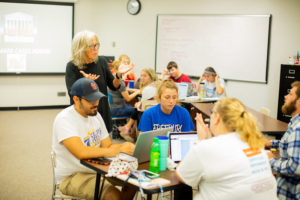
Student Teaching is the capstone clinical field experience during which time students take what they have learned in the classroom and apply it to a real word school setting such as a high school or elementary school. Student teaching is 70 consecutive days long. During this experience in an accredited school classroom, students will gradually assume full-time teaching duties under the supervision of the cooperating (classroom) teacher and the university supervisor.
Student candidates who want to be a part of Student Teaching must complete the following requirements prior to March 1 of the year before the date student teaching is to begin. Applicants must…
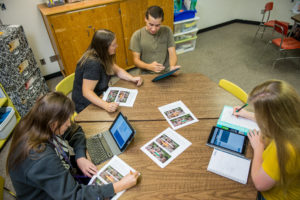
At the close of their final semester, students normally apply to the state for licensure. Teaching certificates are then issued by Iowa to applicants who meet these requirements:
When planning to teach in a state other than Iowa, students will plan their programs in accordance with the requirements of the other state. They will in turn be recommended by the university for those certificates for which they qualify.


99% of students on the Lamoni campus receive financial aid.
As you consider college, you want a simple, easy-to-understand formula designed to ensure that the one-of-a-kind Graceland Experience is within reach for your family. Undergraduate tuition includes our unique Transformational Leadership major, and we offer generous financial aid and scholarships to all of our students, making Graceland as affordable, if not moreso, than most public universities.
Questions?
Next Steps